|
|
http://www.thinkbroadband.com/news/i/5015.html
Some good, some bad points. Will update as and when more information appears.
|
|
The author of the above post is a thinkbroadband staff member. It may not constitute an official statement on behalf of thinkbroadband.
|
|
|
|
|
|
The author of the above post is a thinkbroadband staff member. It may not constitute an official statement on behalf of thinkbroadband.
|
|
|
|
I would be interesting to know a little more about the technical details of the deployment, my initial assumption is that they will simply add a splitter node in the footway outside the PCP at the same time as they commission an FTTC cab?
Assuming a 32-way split as per the existing FTTP deployment this would only require a couple of fibres back to the Exchange.
|
|
Register (or login) on our website and you will not see this ad.
|
|
|
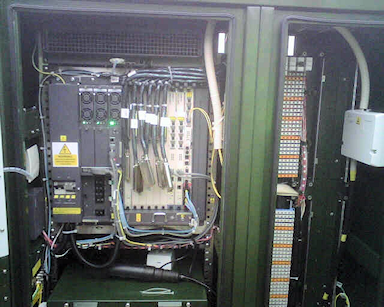
Might even be room in the cabinet. I suspect they will want to avoid civils, just adding tubing and blow fibre to the property in question.
Rather than through individual questions I can save them up, and ask them all at once. Currently waiting on them to check if this solution will be used for Direct Exchange Lines (DEL).
|
|
The author of the above post is a thinkbroadband staff member. It may not constitute an official statement on behalf of thinkbroadband.
|
|
|
So since my cab is outside my door it would be cheap to deploy? lol
BE*Unlimited 18452/1408Kbps @ 3db INP1
|
|
|
Excellent. Just the kind of thing I was hoping to see in a recent post here.
|
|
|
With cab outside your door then 80 Meg and more with vectoring should be feasible on FTTC.
But if they do a custom pricing option I would expect you to be cheaper to install. No pricing from BT, so my news stuff is speculation, based on historical costs of this sort of thing.
|
|
The author of the above post is a thinkbroadband staff member. It may not constitute an official statement on behalf of thinkbroadband.
|
|
|
|
Not really a question as such, but thinking aloud (and far into the future), I wonder what the economics would be when you get to a situation where for example a 128 line FTTC cab hits it's maximum capacity. Would it be cheaper to bolt another 128 line cab to the existing one or just use FTTP for all future fibre-based product installs for that PCP?
|
|
|
The standard chunky cab is 288 line capacity, so a smaller one could be replaced. Generally sized to allow for 50% takeup if memory is working.
When it comes to expansion, then someone will crunch the numbers, it might even be worth stopping VDSL2 totally in the area, and do everyone with FTTP. Always was an option, but is now an option that seems more likely
|
|
The author of the above post is a thinkbroadband staff member. It may not constitute an official statement on behalf of thinkbroadband.
|
|
|
|
I always assumed they would add another 128 line cab rather than replace the existing due to the disruption that would cause to existing users, plus the expense of having leftover 128 line cabs (what do they fetch on eBay?!)
The main reason for asking is in our area (Orpington / Farnborough, Kent) they seem to be using the 128 line cabs for the FTTC deployment, which given the population density in the area is a surprise although a mitigating factor is the fact that the Virgin Media service is widely available.
|
|
|
Might even be room in the cabinet. I suspect they will want to avoid civils, just adding tubing and blow fibre to the property in question.
There was the recent quote from planning permission, that BT intended a lifetime of 20 years for the FTTC cabinets.
I would have thought that they'd want the fibre overlay to be in the ground longer than this - 40 years+ is my guess.
Those two 'facts' would combine to suggest that the fibre overlay would be best kept out of the cabinet. It could equally suggest that the lifetime of the cabinets just got a tiny bit longer 
Am I right in thinking that the fibre used to the cabinet is the same PON that BT are currently deploying FTTP on?
|
|
|
Hmmm Bonded FTTP i think 
BE*Unlimited 18452/1408Kbps @ 3db INP1
|
|
|
|
I don't think that the cabinets themselves will be used at all for this.
By the way, we all have DELs, you are thinking about E0 lines.
|
|
|
|
I'm not sure I'd infer actual plant lifespans from the estimates in the planning application.
AFAICT BT weren't asking for planning permission for the cabs to last 20 years, merely indicating the sort of timeframe they expect them to be around.
I suspect that 20 years is a nice number to give to the planning boards - too long to grant as temporary / time limited permission but not "permanent" as e.g. a new house would be, so unlikely to need as much scrutiny / consideration.
|
|
|
Am I right in thinking that the fibre used to the cabinet is the same PON that BT are currently deploying FTTP on
No, FTTC uses point to point fibre from exchange (head end) to cabinet
|
|
|
|
Likely to be same fibre cable, just take a fibre pair and connect to an FTTP splitter and you have capacity for 32 Premises.
I suspect that mostly to start with this would be available for business type uses. So web developers etc may want this, and would be useful in mixed residential / business areas.
How many people will want to pay the extra £20-£30 per month that it will cost for 110Mb over the upto 80Mb product for home residential use? Those running a business from home are the likely users.
|
|
|
They used 128-line ECI cabs in my area, which doesn't have Virgin Media. I estimate that would allow 40-50% take-up on my cab and that's not an issue yet, as there was only 1 line connected as of midday today 
However there are other cabs in the area which serve large blocks of flats, where ADSL doesn't exceed 4meg. I expect those ones will fill up pretty quickly.
|
|
|
|
I believe there is a fibre connection on the front interface cards in the FTTC cabinets, so maybe connect a splitter to that and fibre to the end user
|
|
|
|
I suspect a lot of consumers would be happy to pay an extra fee to be connected directly via fibre.
personally if BT offered, say :-
80/20 FTTC - £35 a month unlimited.
300 (or more) /200 FTTP - £40 a month, plus install fee of £300-500.
I think i would take the latter.
|
|
|
Particularly since if you own your own home it potentially adds to the value if you sell in the future...
Add the reliability i.e. not subject to RF noise and scope for 1 Gbps in a few years
BT has not confirmed pricing, but I suspect that you will be able to pay for the 110 Mbps product so long as you cover the install fee.
|
|
The author of the above post is a thinkbroadband staff member. It may not constitute an official statement on behalf of thinkbroadband.
|
|
|
|
Would be very interested if this meant we could have "FTTP on demand" for EO lines....
Perhaps this is where EO lines will finally be included in the fibre rollout.
|
|
|
|
Yes, initially I think BT has dropped a huge financial clanger.
A savvy financial company would have done it more like this ?
1) announce the roll out of FTTC.
2) provide FTTC wherever its financially the cheapest to do so, while covering the maximum percentage of the population. (ergo grab some headlines)
3) upgrade all of the exchanges anyway.
4) Offer FTTP to customers for a price.
why? because lots of people are crying out for great broadband, and really would overpay on regular charges to get it (i know i would have, and, see the post in another part of the forum)
I haven't thought about it before really.. but i dont think BT have either...
|
|
|
What happens to existing users service when the 128 limit is reached and they need to change the smaller cab with a bigger 288 line capapcity cab? Doesn't it make sense just to install the larger cab by default anyway?
|
|
|
If money is unlimited they yes, but with takeup unclear at this time, a more financially prudent route in the short to medium term seems to be the emphasis
|
|
The author of the above post is a thinkbroadband staff member. It may not constitute an official statement on behalf of thinkbroadband.
|
|
|
In terms of removing the 128 fttc cab and replacing it with the 288 one, would they need to call the power company up again to reconnect the power (dig up the road again etc...) or just use the same existing cable that was providing power to the smaller cab and use that for the replacement of the larger cab?
|
|
|
Yes, initially I think BT has dropped a huge financial clanger.
A savvy financial company would have done it more like this ?
1) announce the roll out of FTTC.
2) provide FTTC wherever its financially the cheapest to do so, while covering the maximum percentage of the population. (ergo grab some headlines)
3) upgrade all of the exchanges anyway.
4) Offer FTTP to customers for a price.
I think BT have been a lot more clever than you might realise - and have actually done largely what you suggest..
1. They announced FTTC
2. They will be upgrading the areas where it makes commercial sense to by 2015.
3. They use BDUK funding to upgrade the other exchanges.
4. They 'trial' FTTP in various places or where there are a lot of big customers to get experience in rolling it out and now announce 'FTTP on demand'
This enables them to see exactly what the size of the market is for FTTP market is - I suspect BT think its not as large for residential users as you do (compared to FTTC)
FTTP on demand will also let them install FTTP/FTTB for new builds in FTTC areas and fibre EO lines..
If it turns out the market is larger than they think, then they can justify rolling out more FTTP themselves - and in the meantime say its already available (at a price) + they have said they expect FTTC to exceed 100Mbps in future..
Edited by gt94sss2 (Sat 04-Feb-12 19:57:12)
|
|
|
Yes, i see what you mean. they have played it a bit strange.
as you say, maybe its because their market research has just identified all the people who post on this forum as internet junkies, and we are the minority who would pay over the odds, and not everyone. or a larger percentage of the population to make it profitable.
i guess i wish that they had just got their act together sooner, and were not years behind other countries.
dream on i guess... well, at least for 4/5 years.. when i suspect we will finally catch up with a lot of the world.
|
|
|
|
I await with interest the first quote to a residential customer without a FTTC enabled cab for FTTP... I wonder how much I'd pay for this, interesting times ahead. As one poster has already said, it will be painful to have to drop hundreds or even a couple of thousand pounds on FTTP installation that my neighbours have got for less than a hundred quid, unless line rental is less for on demand lines as OR don't have to recoup installation???
|
|
|
Yes, initially I think BT has dropped a huge financial clanger.
A savvy financial company would have done it more like this ?
1) announce the roll out of FTTC.
2) provide FTTC wherever its financially the cheapest to do so, while covering the maximum percentage of the population. (ergo grab some headlines)
3) upgrade all of the exchanges anyway.
4) Offer FTTP to customers for a price.
I think BT have been a lot more clever than you might realise - and have actually done largely what you suggest..
1. They announced FTTC
2. They will be upgrading the areas where it makes commercial sense to by 2015.
3. They use BDUK funding to upgrade the other exchanges.
4. They 'trial' FTTP in various places or where there are a lot of big customers to get experience in rolling it out and now announce 'FTTP on demand'
This enables them to see exactly what the size of the market is for FTTP market is - I suspect BT think its not as large for residential users as you do (compared to FTTC)
FTTP on demand will also let them install FTTP/FTTB for new builds in FTTC areas and fibre EO lines..
If it turns out the market is larger than they think, then they can justify rolling out more FTTP themselves - and in the meantime say its already available (at a price) + they have said they expect FTTC to exceed 100Mbps in future..
It's surely going to have a massive effect on leased line pricing and take up in the future though, it seems a strange business decision from BT really, alot of medium sized companies that are paying thousands of pounds a month are surely going to move to BT FTTP and the ones that don't will I guess be paying less due to downward pressure on leased line pricing?
I know that FTTP won't have the same kind of SLA's a leased line is provided with but most companies aren't really business critical users as such and could even keep the leased line as a failover option. Even changing from a guaranteed 300mb/s to a 60mb/s that is burstable to 300mb/s would save £3000 a month according to AAISP's pricing.
I don't think the info is broken down that far in their annual accounts but I would expect BT make far more from providing leased line services than they do consumer broadband. They certainly make more from their business services overall than their consumer side or did when I last looked at their annual accounts.
|
|
|
|
I have 4 offices in FTTC areas - none of them are connected to cabs that can offer FTTx... BT have a mechanism to maintain their leased-line revenue...
|
|
|
I have 4 offices in FTTC areas - none of them are connected to cabs that can offer FTTx... BT have a mechanism to maintain their leased-line revenue...
That makes sense (for BT anyway).........are they on large commerical developments or are they more on old streets etc? In their press release BT did mention small businesses as a target for FTTP but not medium/large businesses.
I know FTTP won't be symetrical like leased lines but most businesses use a lot more downstream bandwidth than upstrem.
|
|
|
|
I've noticed this too. ESROS (edinburgh rose street) which serves the west end of Edinburgh, with loads of very tech-savvy businesses has not been announced for FTTC nor even ADSL2+. Exchanges in predominantly residential areas such as corstorphine have been enabled yonks ago.
You'll also find a similar story in many other cities -- the suburbs have been done, but the central exchanges serving the central business districts are missing or last in line. Either there is some technical reason or BT is holding on to the leased line revenue as much as they can.
|
|
|
|
I would imagine the latter. The cab won't use a tremendous amount of power (spotters might check how much snow settles on them in this cold weather), but I'd imagine the consumption not to be anything huge. I'd imagine the smallest feed worth running would be 16, or 32 amps single phase, which should easily run a 288 line cab
|
|
|
Apologies for replying to an old post but is there any indication that FTTP on-demand would be available for those on enabled exchanges whose cabinets have been skipped? It would seem technically possible to allow an on-demand install from the nearest fibre cabinet even if this is not the one that serves your phone line.
As someone whose cabinet has been skipped even the relatively high cost of install is attractive if this option were on the table from the nearest fibre cabinet (about 250m).
Mike
|


 Pages in this thread:
  Print Thread


 MaryHinge